




Types of Extruders
 Mar 24, 2025|
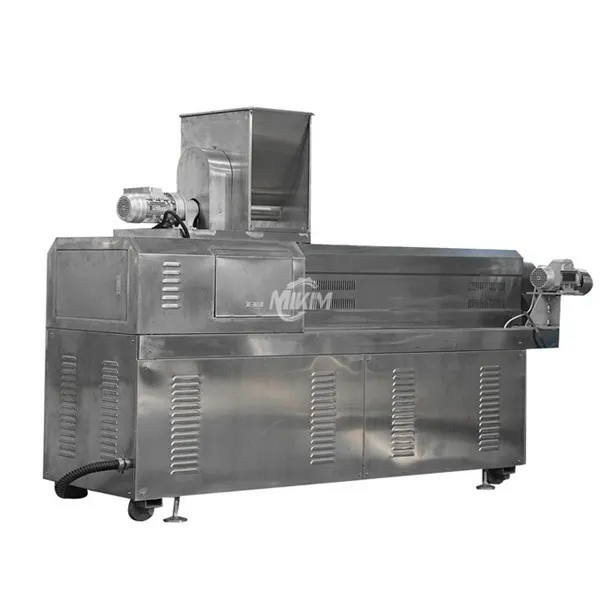
 Extruders play a pivotal role in determining the quality, texture, and nutritional value of food products. Choosing the right type of extruder is essential for achieving the desired product characteristics while maintaining efficiency and cost-effectiveness. There are primarily three types of extruders in the food industry: Single Screw, Twin Screw, and Piston Extruders.
|
Model |
Power |
Capacity |
Heater |
Dimension(mm) |
Weight |
|
LYS-65 |
5.5kw |
50 kg/h |
1 kw |
1720*870*1050 |
350 kg |
|
LYS-70 |
15kw |
150kg/h |
1 kw |
1720*970*1250 |
500 kg |
|
LYS-85 |
18.5kw |
200-300kg/h |
2 kw |
1360*1870*850 |
650 kg |
|
LYS-95 |
22kw |
400-500kg/h |
2 kw |
2300*1170*1400 |
850 kg |
Single Screw Extruders
Single screw extruders, as the name suggests, utilize a single rotating screw within a stationary barrel to process the raw materials. These extruders are known for their simplicity and are typically more affordable. With a power range between 50 to 250 kW, they are commonly used for producing pasta, snacks, and some cereal products.
Advantages:
Cost-effective for small to medium scale production.
Simpler design makes maintenance easier.
Disadvantages:
Limited mixing capability can lead to inconsistent product quality.
Lower efficiency in handling multiple or complex ingredients.
Twin Screw Extruders
Twin Screw Extruders use two intertwined screws, allowing for more intense mixing and shearing of ingredients. They can operate at a higher power, ranging from 100 to 500 kW, which can lead to faster processing speeds.
Advantages:
Superior mixing capability, ensuring even distribution of ingredients.
Can handle a diverse range of raw materials, from high protein to high fiber.
Disadvantages:
Higher initial cost.
More complex design can lead to higher maintenance costs.