




How Does Extrusion Transform Snack Food?
 Apr 09, 2025|
 Extrusion transforms snack food through a series of mechanical and thermal operations. The raw materials are initially metered into the extruder's feeding hopper when conveyed and compacted. As these materials progress through the barrel of the extruder, they encounter increasing pressure and temperature facilitated by the mechanical shear generated by the screw(s) and the external heating elements.
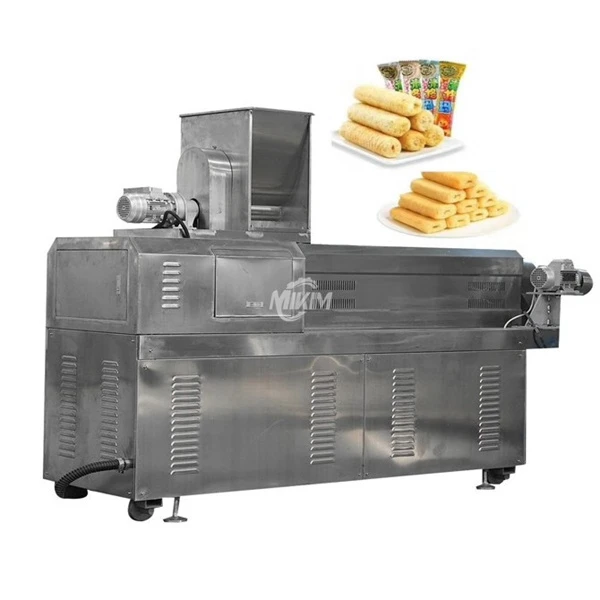
|
Model |
Power |
Capacity |
Heater |
Dimension(mm) |
Weight |
|
LYS-65 |
5.5kw |
50 kg/h |
1 kw |
1720*870*1050 |
350 kg |
|
LYS-70 |
15kw |
150kg/h |
1 kw |
1720*970*1250 |
500 kg |
|
LYS-85 |
18.5kw |
200-300kg/h |
2 kw |
1360*1870*850 |
650 kg |
|
LYS-95 |
22kw |
400-500kg/h |
2 kw |
2300*1170*1400 |
850 kg |
This environment cooks the mixture, gelatinizing the starches and denaturing the proteins, transforming the physical and chemical properties. Upon exiting the die, the sudden drop in pressure causes the product to expand and solidify into its final shape and texture. The precise control of temperature, pressure, and cooking time allows for manipulating the snack's characteristics, resulting in a diverse array of products from a single extruder.