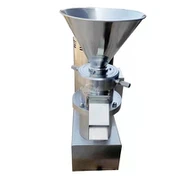
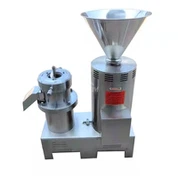
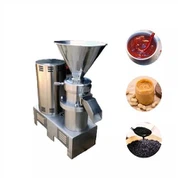
Colloid Grinding Machine
model
50 85 130
power
1.5kw 5.5kw 7.5kw
No-load speed
2900r/min
size
600*300*700mm 800*350*950mm 900*400*1000mm

- Product Introduction
Nut grinder peanut butter

Preparation before replacing the colloid mill bearing
1. First, confirm whether the bearing needs to be replaced, which is usually manifested by abnormal noise or vibration during the operation of the bearing.
2. Prepare the necessary tools: wrench, pliers, rubber hammer, oil tank, cleaning agent, lubricating oil, etc.
Colloid mill disassembly
1. Turn off the power and stop the colloid mill.
2. Disassemble the main part of the colloid mill and separate the grinding disc and the shell.
3. Remove the bearing protection sleeve and remove the reinforcement screw.
4. Remove the bearing from the shaft. You can use a rubber hammer to tap the center of the bearing axis to assist.
Removing the bearing
1. Use a wrench or pliers to unscrew the bearing fixing screw.
2. Remove the bearing from the shaft.
3. Clean the bearing with a cleaning agent and oil tank, and dry it after cleaning.
Installing a new bearing
1. Insert the bearing into the kit and then into the axis, paying attention to the direction.
2. Screw on the bearing fixing screw.
3. Install the protective cover back in place and tighten the reinforcement screw.
Assembling the colloid mill
1. Apply an appropriate amount of lubricating oil to the contact surface of the bearing and the grinding disc.
2. Assemble the grinding disc and the housing together.
3. Turn on the power and start the machine for inspection.

| model | capacity | power | No-load speed | size |
| 50 | 0.005-0.3t/h | 1.5kw | 2900r/min | 600*300*700mm |
| 85 | 0.2-2t/h | 5.5kw | 2900r/min | 800*350*950mm |
| 130 | 0.2-4t/h | 7.5kw | 2900r/min | 900*400*1000mm |
| 180 | 0.8-6.0t/h | 15kw | 2900r/min | 1100*500*1100mm |
| 210 | 4-15t/h | 22kw | 2600r/min | 1200*500*1400mm |
peanut butter grinder
Notes:
1. When replacing bearings, choose bearings of the same model and specification as the original bearings, and ensure the fit of the bearings.
2. When removing and installing bearings, clean the surface of the bearings and the surface of the bearing seats and apply an appropriate amount of lubricating oil.
3. When assembling the colloid mill, pay attention to the correct installation position of all parts.
4. After replacing the bearings, conduct a test run and check the effect to ensure that everything is normal before formal use. In short, replacing the bearings of the colloid mill requires careful, patient and professional operation. Following the above steps and precautions, you can also easily complete the bearing replacement.

1. When replacing bearings, choose the appropriate bearing specifications and quality to ensure their normal operation.
2. Before replacing bearings, you need to confirm whether the bearings are really damaged. If there is no problem with the bearings, then there is no need to replace them.
3. When replacing bearings, you need to pay attention to cleaning. Make sure the bearing chamber is clean to avoid foreign objects such as sand and dust.
4. When replacing bearings, pay attention to the installation order. Install the bearings first, then install the base and gasket.
5. After replacing the bearings, a test run is required. Observe whether the mill is running normally, and whether there are problems such as abnormal noise and oil leakage.

Our Advantages
150
+
Number Of Employees
3000㎡+
Factory Area
10
+
Years Of Experience
800㎡+
Company Area
Peanut grinder
Preliminary cleaning:
Rinse the inside of the equipment and the disassembled parts with clean water to remove residual materials on the surface. This step helps soften and remove most easily cleaned dirt.
Deep cleaning:
Soak the disassembled parts in an appropriate detergent solution. The soaking time should be determined according to the degree of contamination of the parts to ensure that the detergent can fully penetrate the dirt.
Use a soft brush or clean cloth to scrub the parts, especially the hard-to-clean parts such as the teeth and grooves. These parts are prone to dirt accumulation and therefore require special attention.
Cleaning non-removable parts:
For non-removable parts of the colloid mill, such as the grinding seat groove, etc., first use clean water to rinse off the waste residue, and then use a brush dipped in detergent to scrub. When scrubbing, make sure that the detergent can cover all surfaces and rinse thoroughly.
Qualification & Honor

Customer visits

Hot Tags: colloid grinding machine, China colloid grinding machine manufacturers, factory, peanut butter components, Peanut Paste Machine, peanut butter transportation system, peanut butter lights, peanut butter hopper, peanut butter transportation process