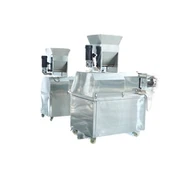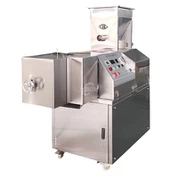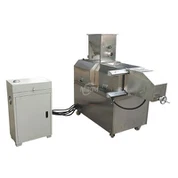


Rice Extruder
Rice Extruder is studied in concern with the loss of nutritional elements in the rice which is made by the traditional rice processing. Rice and its by-products can be produced into highly nutritional foods by adding additional nutrient components after extrusion cooking. Further, for this process, the broken rice and rice bran can be reused.

- Product Introduction
Why choose us
Our Products
Our main products include food extruders, meat slicers, meat cutters, peanut butter machines, and jam machines. We also manufacture feed machinery and equipment.
Delivery Speed
We prioritize fast delivery, shipping equipment within three days.
Our Company
Our factory covers more than 3,000 square meters and employs over 160 workers. We have hundreds of skilled technicians to ensure our equipment meets high-quality standards.
Product Application
Our products are used in various applications. Food puffing machines are utilized in food processing plants and snack production facilities. Meat roll and block machines are found in meat processing plants, restaurants, hotels, butcher shops, and fast food restaurants. Peanut butter and jam machines are used in the food and oils industries.


Corn puff extruder machine
Protein bar extruder machine
Puff extruder machine
Soybean extruder
Puff Extruder Machine
Stainless steel extruder, every seed has the power of dream, and extruder for food is like the engine of this dream.

MIKIM is a manufacturer of puffed food equipment with many years of production experience.

Model
80 90 135
production capacities
200-240kg/h 400-500kg/h 500-700kg/h
Power
22kW 30KW 55kW

Model
DF50-28D DF62-28D DF72-28D
Capacity (kg/h)
60-100 200-350 350-500
power (kw)
37 90 110
Model
MK-40 MK-50 MK-60
Capacity
40-50KG/H 80-100KG/H 120-150KG/H
Power
5.5KW 7.5KW 15KW
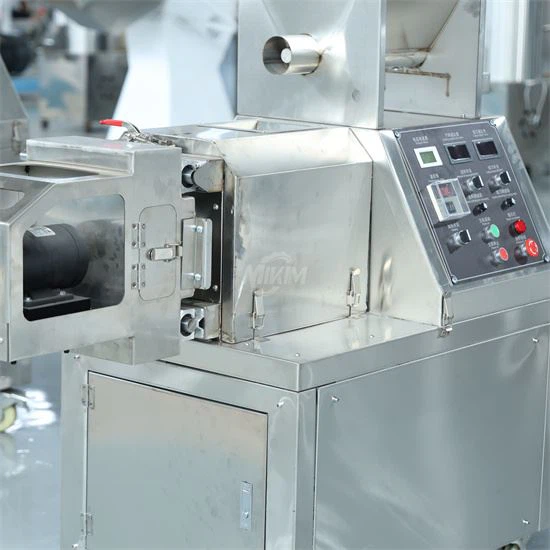
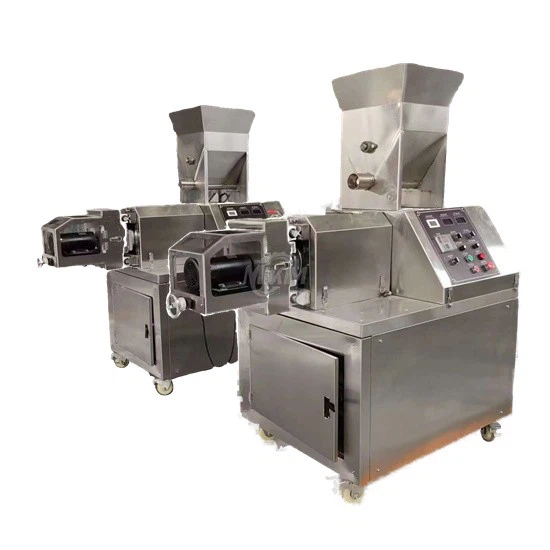
Small Corn Puff Extruder Machine
Model
80 90 135
Production capacities
200-240kg/h 400-500kg/h 500-700kg/h
Power
22kW 30KW 55kW
Weights
460KG 800KG 1200KG

Model
40 50 60 70
Power
5.5KW 7.5kW 15kW 18.5 kW
Sizes
1300*1200*1100 1350*1100*1200 1350*110*1200 1500*1360*1250
What is Rice Extruder
Rice Extruder is studied in concern with the loss of nutritional elements in the rice which is made by the traditional rice processing. Rice and its by-products can be produced into highly nutritional foods by adding additional nutrient components after extrusion cooking. Further, for this process, the broken rice and rice bran can be reused. Process for making artificial rice grains, comprises a mixture of rice flour, water and oil in extruder, forming into rice-grain shape, drying and cooling in low temperature. The technique makes it feasible to avoid the loss of nutrition.
Advantage Of Rice Extruder
Time-Saving: The extruder machine can produce rice-like grains in a fraction of the time it takes to cook traditional rice, which can save a lot of time in food processing.
Cost-Effective: The machine requires fewer raw materials and labor than traditional rice production, which can help reduce production costs and increase profits.
Versatility: The machine can produce rice-like grains from a variety of raw materials, including rice flour, corn flour, potato starch, and more, which can help manufacturers create a range of products to meet market demands.
Consistency: The extruder machine can produce uniform rice-like grains, which can help maintain product quality and consistency.
Most Common Types of Rice Extruder
We offer various types of fortified rice extruder machines, each with its own set of features and capabilities. Here are some of the most common types:
Single Screw Extruder
This is the most basic type of fortified rice extruder. It uses a single screw to mix the rice and micronutrient powder together before extrusion. The resulting grains are typically small and cylindrical in shape. Single screw extruders are simple to operate and maintain, making them a popular choice for small-scale operations.
Twin Screw Extruder
This type of extruder uses two screws to mix the rice and micronutrient powder together. The twin screw design allows for more thorough mixing, resulting in more evenly fortified rice grains. Twin screw extruders can also handle a higher volume of rice, making them suitable for larger-scale operations.
Co-rotating Twin Screw Extruder
This extruder features two screws that rotate in the same direction. The co-rotating design allows for more efficient mixing and better control over the extrusion process. These machines are often used for more complex recipes, such as fortified rice with multiple micronutrients.
Counter-rotating Twin Screw Extruder
This type of extruder uses two screws that rotate in opposite directions. The counter-rotating design creates a kneading effect that helps to evenly distribute the micronutrients throughout the rice. These machines are often used for high-precision operations, such as fortifying rice with sensitive micronutrients.
Automatic Extruder
Equipped with an automatic feeder, this extruder can continuously process rice without the need for manual intervention. Automatic extruders are typically more expensive than manual machines but can save time and labor costs in the long run.
Customized Extruder
This type of extruder is specially designed to meet the specific needs of a particular operation. Customized extruders can be equipped with a wide range of features, such as a modified screw design or a specialized die.
Important Features of Rice Extruder
Screw Design: The screw design is crucial as it determines the extrusion rate, temperature, and pressure.
Heating System: The extruder is equipped with a heating system that heats the raw rice to a high temperature, allowing for expansion and starch release.
Die Design: The die design determines the shape and size of the final product. Different die designs can produce various shapes and sizes of extruded rice with our machine.
Cooling System: After extrusion, the rice needs to be cooled quickly to prevent further cooking and maintain the desired texture. Our extruder includes an effective cooling system.
Control Systems: Our extruders have control systems that allow operators to adjust temperature, pressure, and speed, ensuring that the final product meets quality standards.
Cleaning System
Our extruders feature cleaning systems that facilitate easy cleaning after use, ensuring hygiene and readiness for the next batch.
Power Source
Extruders can be powered by electricity or other sources, such as steam, depending on the model and design.
Capacity
The capacity of the extruder is another important feature; our FRK Twin Screw Extruder is available in capacities ranging from 300 kg/hr to 700 kg/hr.
Durability
Our extruders are typically made from durable materials like stainless steel, ensuring they can withstand the high temperatures and pressures of the extrusion process.
Introduction to the Extruder Structure and Function of Each Part
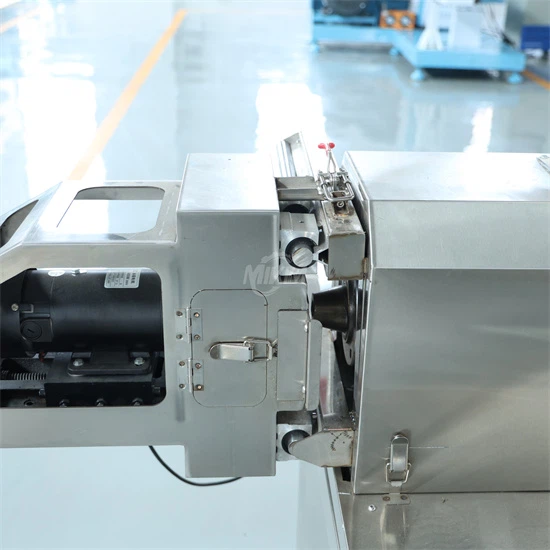
The extruder is mainly composed of a Driving System, Transmission System, Feeding System, Extrusion System, Temperature Control System, Cutting System, Shaping System, and Control System.
Driving System: The main motor generates the driving force needed to operate the extrusion system.
Transmission System: This system distributes the driving force to the extrusion system.
Feeding System: It supplies raw materials to the extrusion system uniformly.
Extrusion System: The core part of the extruder consists of the barrel and screw, which transform the raw material from its original form into a preliminary product form.
Temperature Control System: This system provides active cooling and additional heating to meet the processing temperature requirements for different products.
Shaping System: It shapes the product into various shapes and sizes.
Cutting System: This system cuts the product into different sizes.
Control System: It controls the entire extruder, monitors its operation, manages the start and stop functions of each system, and adjusts the operating parameters.
How to Clean the Extruder Barrel and Screw?
Resin Cleaning Method
This method involves using a resin, such as polyester resin or epoxy resin, with a cleaning machine. It is generally used for new equipment or after the extruder has been in operation for a period of time, as material may remain on the extruder screw or barrel and gel. This can slow down the material extrusion speed, especially when there is a significant color difference in the variety being processed. After using the resin cleaning machine, additional external lubrication and calcium powder can be added to further clean the machine. Once the extrudate is considered clean, production can officially resume.
Non-Resin Cleaning Method
This method uses materials such as rice, corn, sawdust, and toilet paper, which provide certain friction and are easy to crush. When the extruder is heated to the normal extrusion temperature, the friction between these materials and the screw and barrel helps remove the resin deposits attached to their surfaces. Experience has shown that rice husks have high hardness and friction, making them particularly effective for cleaning. After using this method, it is necessary to open the extruder barrel to check the cleaning condition. Generally, the machine should be cleaned with the resin cleaning method before beginning production of the final product.
Manual Cleaning Method for Disassembling Screw and Barrel
This method involves manually or automatically pushing out the extruder screw after heating the extruder to the working temperature, allowing for the removal of easily detached materials while hot. After cooling, the screw is placed in an organic solvent tank containing cyclohexanone and soaked. As the molten deposits swell, they can be manually removed. The soaking time depends on the amount of attachment and the thickness of the gel. To minimize solvent use and facilitate sealing, steel or stainless steel pipes slightly thicker than the screw diameter can be used as soaking tanks, with one end welded shut. For safety, the container should be stored in a cool place away from fire and power sources, sealed to prevent solvent evaporation, and labeled for safety.
When selecting a rice extruder machine for your business, consider factors such as production capacity, extrusion capabilities, energy efficiency, and ease of maintenance. Look for machines that offer customizable extrusion parameters to meet your specific product requirements. Additionally, opt for rice extruders from reputable manufacturers with a track record of delivering reliable and high-performance extrusion equipment.
Maintenance and Care
Proper maintenance of rice extruders is essential to ensure optimal performance and longevity of the equipment. Regular cleaning of the extrusion chamber, inspection of wear parts, and lubrication of moving components are key maintenance tasks. Scheduled maintenance checks by trained technicians can help prevent downtime and prolong the lifespan of your rice extruder machine.
Enhancing Production Efficiency
Implementing advanced automation and control systems in rice extruder machines can further enhance production efficiency and product consistency. These systems allow for real-time monitoring and adjustment of extrusion parameters, ensuring precise control over the extrusion process. Investing in modern rice extrusion technology can give manufacturers a competitive edge in the market by delivering superior quality fortified rice products.
MIKIM Machinery is a high-tech enterprise integrating scientific research, design, manufacturing, installation and commissioning, and after-sales service. It has passed CE, ISO and other certifications. Our factory covers an area of more than 3,000 square meters and has hundreds of technicians to ensure that the equipment produced meets the quality standards. At the same time, we can also provide you with equipment customization services. Before the equipment leaves the factory, we will conduct multiple inspections on the equipment to ensure the quality of the equipment. At the same time, if you have any questions during the use of the equipment, we can always call you via video to answer your questions.


Certifications

FAQ
Hot Tags: rice extruder, China rice extruder manufacturers, factory, food extruder for cereals, food extruder for food expert, food extruder machine distributor, snack extruder, continuous food extrusion machine, food extruder for low fat confectionery production